


一,head protective equipment
Head protective equipment is personal protective equipment that is equipped to protect the head from blows from foreign objects and other factors. According to the protective function requirements, there are nine types of products, such as general protective hat, dustproof hat, waterproof hat, cold hat, safety hat, anti-static hat, anti-high temperature hat, anti-electromagnetic radiation hat and anti-insect hat.
Among work-related accidents and traffic accidents, the proportion of death caused by head injury is the highest, accounting for about 35.5% of the total deaths, of which the death caused by falling objects is the first, followed by traffic accidents. The use of safety helmets can avoid or mitigate these injuries.

Use of safety helmets
According to the statistics of relevant departments, 15% of the number of people injured by falling objects are caused by the improper use of safety helmets. So you can't think that wearing a helmet can protect your head from impact injuries. In practical work, we should also understand and do the following:
1.Anyone entering the production site or engaged in production and labor inside and outside the plant must wear a safety helmet (except for special provisions of the state or industry; Special operations or labor, except for taking measures to ensure that the head of the personnel is not injured and approved by the safety supervision department).
2.When wearing a safety hat, the safety cap strap must be fastened to ensure that it does not fall off under various conditions; The brim of the helmet must be consistent with the visual direction and must not be worn slanted or slanted.
3.Do not disassemble the components on the cap and adjust the size of the cap lining to keep the vertical and horizontal spacing in line with the relevant specified values to prevent personal injury caused by the top of the impact.
4.Do not put anything on the hat lining. It is strictly prohibited to arbitrarily change any body of the helmet. It is strictly forbidden to use a safety helmet as a utensil. It is strictly prohibited to use a hard hat as a seat cushion.
5.Safety helmets must have instructions and indicate the place of use for reasonable use by the operator.
6.Should always keep the hat lining clean, if not clean can be washed with soapy water and water. After use, it should not be placed in places with acid, alkali, high temperature, sun, humidity and chemical solvents.
7.Helmets that have suffered a large impact during use cannot continue to be used.
8.If the cap shell or cap lining is aged or damaged, which reduces the impact and penetration resistance, it should not be used any longer and should be replaced with a new cap.
9.Antistatic helmet can not be used as electrical safety helmet, so as not to cause electric shock.
10.From the time of purchase, the plant cap is valid for one and a half years. No more than two years for plastic caps, two and a half years for laminated caps and fiberglass caps, three years for rubber caps and cold caps, and three and a half years for car safety helmets. The above types of safety helmets are prone to aging beyond their general service life and lose the protective performance of safety helmets.
二,Eye and face protective equipment
Personal protective equipment to prevent smoke, dust particles, metal sparks and flying debris, heat, electromagnetic radiation, laser, chemical splash and other injuries to the eyes or face is called eye and face protective equipment.
There are many kinds of eye and face protective equipment, according to the protective function, it can be roughly divided into dustproof, waterproof, anti-impact, anti-high temperature, anti-electromagnetic radiation, anti-radiation, anti-chemical splash, anti-wind sand, anti-glare nine categories.

1.The glasses and masks used must be inspected by the relevant authorities.
2.Select and wear appropriate glasses and masks to prevent them from falling off and shaking during operation, affecting the use effect.
3.The frame of the glasses should fit the face to avoid light leakage on the side. If necessary, use glasses with an eye mask or anti-side light.
4.Prevent mask, glasses from moisture, pressure, so as to avoid deformation damage or light leakage. Welding masks should be insulated to prevent electric shock.
5.When working with face mask goggles, change the protective piece at least once in 8 hours. When the filter of protective glasses is damaged by splashing, it should be replaced in time.
6.When the protector and filter are used in combination, the diopter of the lens must be the same.
7.Welding masks with dust and gas masks shall be maintained and used in strict accordance with relevant regulations.
8.When the lens of the mask is covered by the wet smoke of the working environment and the moisture exhaled by the operator, so that it appears water mist, affecting the operation, the following measures can be taken to solve the problem: ① water film diffusion method. Apply a fatty acid or silicone anti-fogging agent to the lens to spread the water mist evenly. ② Water absorption removal method. An surfactant (PC resin system) is dipped on the lens to absorb the attached water mist. ③ Vacuum method. For some face masks with double glass Windows, the method of vacuuming between two layers of glass can be adopted.
三,Hand protection products
With the function of protecting the hand and arm, the gloves worn by the operator during labor are called hand protective supplies, and are usually called labor protective gloves.
Hand protective devices are classified into 12 types based on their protective functions, including general protective gloves, waterproof gloves, cold-proof gloves, anti-gas gloves, anti-static gloves, anti-high temperature gloves, anti-X-ray gloves, anti-acid and alkali gloves, anti-oil gloves, anti-vibration gloves, anti-cutting gloves, and insulation gloves. Each type of glove can be divided into many kinds according to the material.
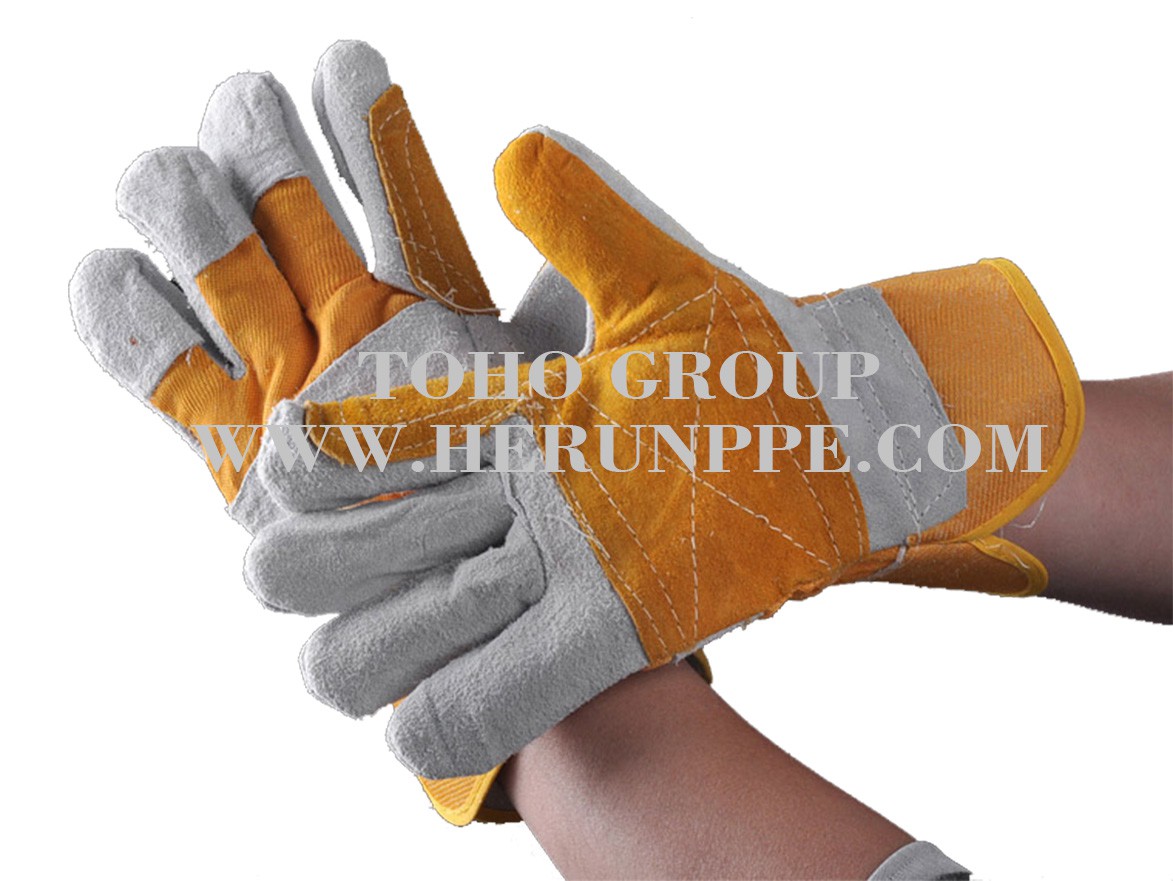
Use of protective gloves
First of all, we should understand the protective effect and use requirements of different types of gloves, so as to choose correctly during operation, and must not use gloves for general occasions as some special gloves. Such as cotton gloves, chemical fiber gloves as anti-vibration gloves to use, the effect is very poor.
Before using insulation gloves, check their appearance. If holes or cracks are found on the surface, stop using them. -- After the use of insulation gloves, according to the relevant provisions of the preservation, to prevent aging caused by insulation performance reduction. After a period of use should be rechecked, qualified before use. When using, pay attention to the product classification color code, such as 1kV gloves for red, 7.5kV for white, 17kV for yellow.
When working with vibration tools, it cannot be considered safe to wear anti-vibration gloves. Attention should be paid to arranging a certain time to rest in the work, and with the increase of the vibration frequency of the tool itself, the rest time can be extended accordingly. For the use of various vibration tools, it is best to measure the vibration acceleration in order to select the appropriate anti-vibration gloves to achieve better protection.
In some cases, the size of all gloves should be appropriate to avoid glove fingers too long, be mechanically twisted or rolled, and cause hand injury.
Anti-vibration gloves can be used when operating high-speed rotating machinery. Some maintenance equipment and oil filling operations, should use oil-proof gloves to avoid oil opponents.
Different types of gloves have their own specific purpose performance, in the actual work must be combined with the operation situation to correctly use and distinguish, in order to protect the safety of hands.


