TOHO Industrial Corp.

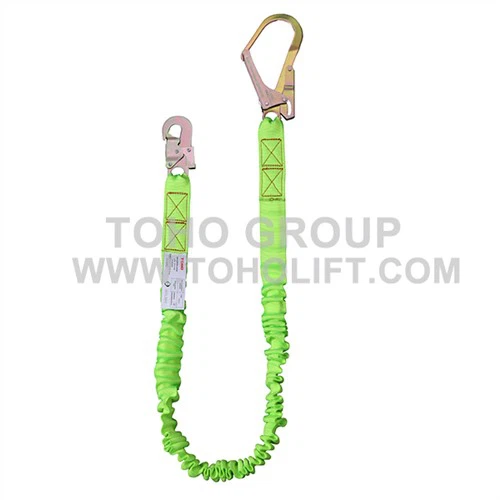
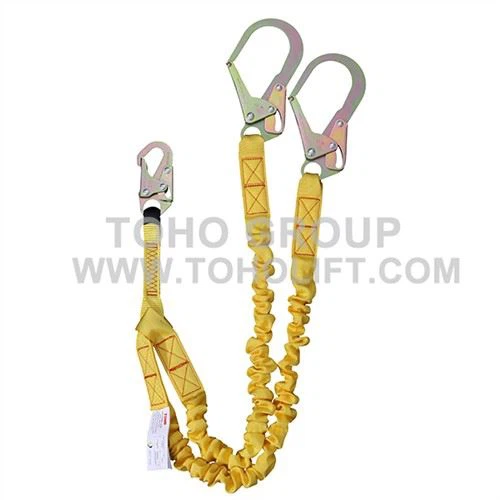
Shock Absorber Lanyard

What is Shock Absorber Lanyard


Shock absorbing lanyards are a specific type of safety lanyard used in conjunction with safety harnesses as a part of a fall protection system. Generally, shock absorbing lanyards are used when working at a height of more than six feet above the ground. The unique feature of a shock absorbing lanyard is that it has a built-in woven inner core that expands during the fall to ensure that the fall arrest force is significantly reduced. Using the right fall protection equipment in the right situations can help prevent severe injury and death.


Advantages of Shock Absorber Lanyard


Abrasion Resistance
Lanyards are regularly uncovered to abrasive surfaces or edges, that could reason wear and tear through the years. Materials with good abrasion resistance, or extra protecting coatings, contribute to the lanyard's longevity via minimizing damage from friction.

Chemical Resistance
Exposure to chemical substances, oils, or different corrosive materials in industrial environments can degrade materials over the years. Certain materials can be selected for his or her chemical resistance, supporting to preserve the lanyard's structural integrity in challenging work situations.

UV Resistance
Outdoor work exposes fall arrest lanyards to ultraviolet (UV) radiation, that could degrade some materials. UV-resistant substances or coatings shield in opposition to solar publicity, making sure the lanyard stays strong and reliable over an extended length.

Flexibility and Fatigue Resistance
Materials that maintain flexibility and withstand fatigue are important for consolation in the course of use and prolonged service life. Lanyards regularly undergo bending and flexing, and substances with suitable flexibility characteristics are less liable to turning into brittle or breaking over time.

First 123 Last 1/3
Why Choose US


Our factory
As a long history factory, we are first-class in scale, capital, staff,research and development, technology and price. We can provide you best product with best price.

Professional Equipment
We have advanced imported textile machines, dye equipment, computer pattern sewing machine, air compressor and full sets of testing machine, such as Universal Tensile Strength Testing Equipment, Salt Spray Corrosion-resistance Testing Equipment, Webbing Wear-Resistance Testing Equipment, UV lamp testing Equipment,Flame-Resistance testing Equipment, bending test machine, hardness test machine and 8-meter fall attest testing tower, etc.

Professional team
Professional technical personnel and skilled worker keep us at the forefront of the industry. Our products are CE and ANSI certificated. We can produce all kinds of safety harness and accessories in accordance with European standard, American standard and Australian standard. In addition, we can also make customerized style as per your requirement.

Quality control
From raw material control to production process control to finished product testing control, we strictly follow the quality management system. Our factory is ISO9001:2015 certified. Static strength test and Dynamic performance test for our products are conducted according to EN 364. We will do bending, hardness, Salt Spray Corrosion-resistance and tensile strength test for hardware to ensure its quality and your safety. For the webbing, we will do Wear-Resistance Test, UV lamp test and Flame-Resistance test, etc.


Types of Shock Absorber Lanyard
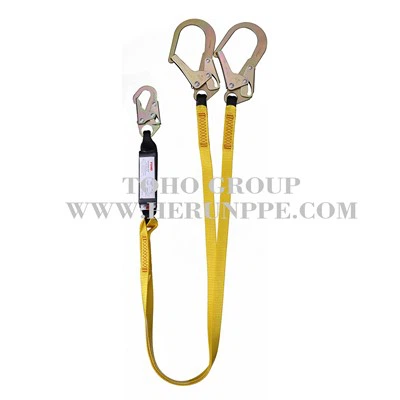
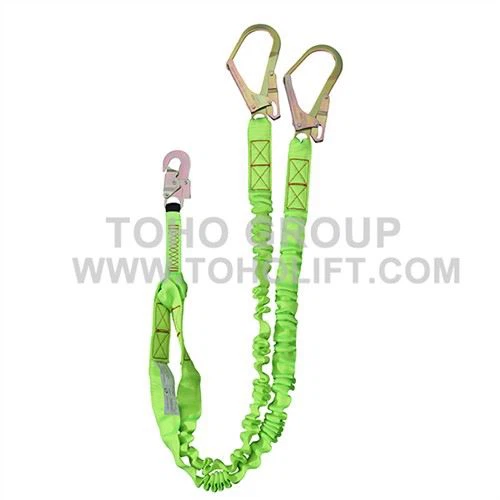
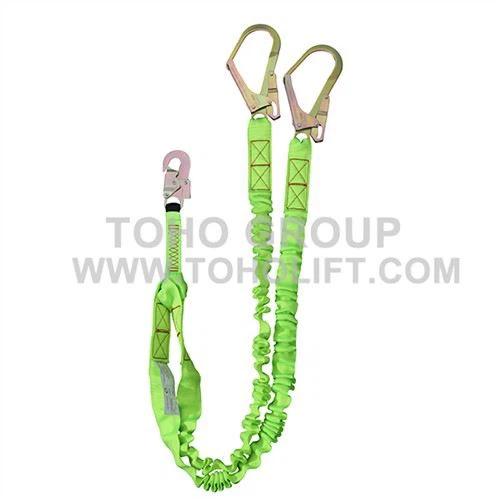
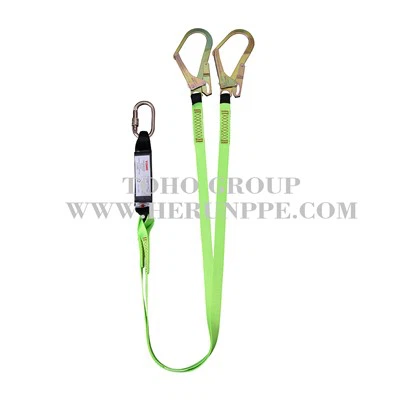
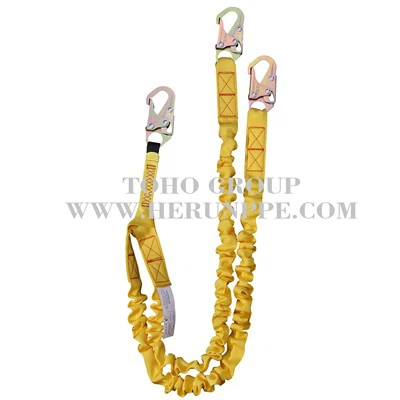
Double Leg Safety Lanyard
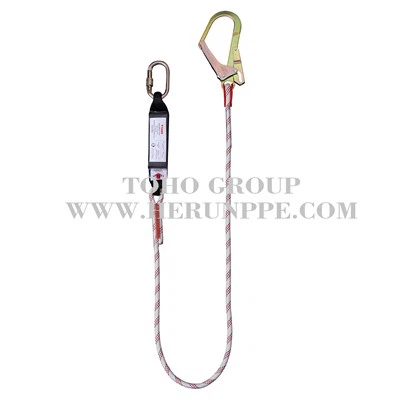
Internal Shock Absorbing Lanyards
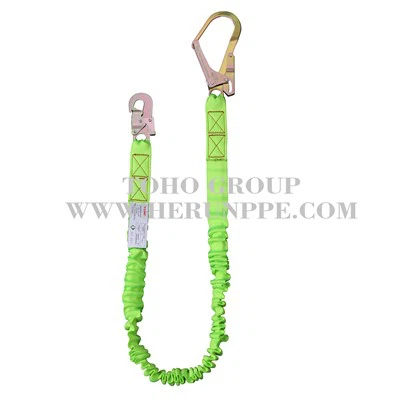
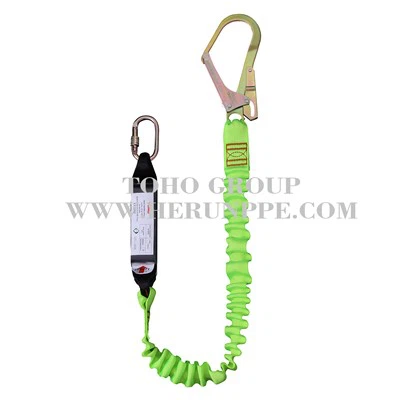
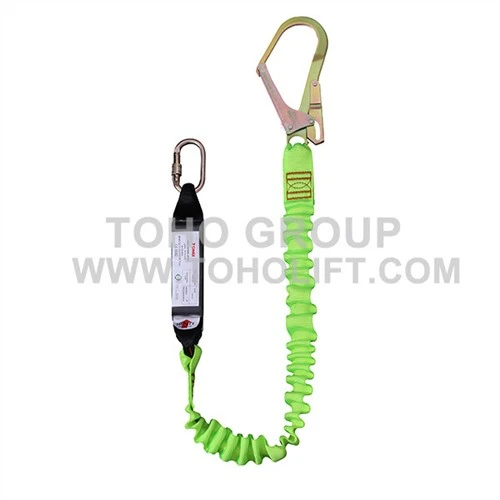
CE EN355 Single Leg Elastic Energy Absorbing Polyester Webbing Lanyard with Energy Absorber for Fall Arrest and Elevated Work Platform
Twin Tails Energy Absorbing Webbing Lanyard

Pack Style Shock Absorbing Lanyards
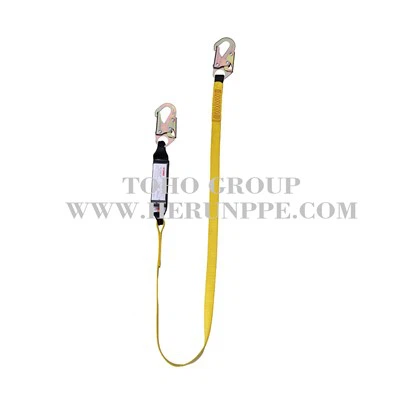
These are the most common type of lanyards used in the marketplace. Typically, these are common because they are simple to use and easier to inspect than other types of lanyards. These lanyards can come in a variety of styles (web, cable, Kevlar and even rope). The shock absorber can deploy up to 60” depending on the style used.

Tubular Style Shock Absorbing Lanyards
These lanyards are also very popular. They are often lighter weight and can include a “stretch” style version that will expand between 4½ and 6 feet. As with all our lanyards, you can specify your connecting components such as rebar hooks, aluminum snap hooks and many more styles.

Positioning Lanyards
These lanyards are made without shock absorbing properties such as a web lanyard and rebar chain assemblies. These are used as positioning or restraint and eliminate the likelihood of a fall occurring. Non-shock absorbing lanyards are for fall restraint only, not to be used for a fall arrest connector.

Cable & Kevlar Shock Absorbing Lanyards
These lanyards are considered specialty lanyards, offering high abrasion resistance or heat resistance used for arc flash protection or welding applications. Most of theses styles utilize a shock absorbing pack to reduce fall arresting forces.

Lanyards for Tying Off at your Feet (Free Fall Lanyard)
These lanyards are specifically designed to be used when the worker is connected to an anchor point located at their feet. Allowing an extended free fall up to 12' can extend the shock absorber deployment up to 60”. Be absolutely sure to consult your company's Competent Person for authorization prior to use.

Tie-Back Shock Absorbing Lanyards (TBL)
For greater versatility for the worker, a TBL can be used when an appropriate anchorage connector is not made available. A Tie-Back Lanyard is the perfect addition to any employee's fall protection system. Tie Back lanyards come in two styles either with a d-ring or with carabiner that ties back to extra heavy duty webbing. Be sure you are tying of to a secure anchor point.


Structure of Shock Absorber Lanyard


Connectors: Inspect the connectors at both ends of the lanyard. Ensure that they are secure, undamaged, and free of deformities. Verify that the locking mechanisms (e.g., snap hooks, carabiners) operate smoothly and securely lock in place.
Shock Absorber Pack: If the lanyard has an integrated shock absorber pack, examine it closely. Ensure it is in good condition without visible tears, punctures, or deformation. Check that it is securely attached to the lanyard and that stitching or webbing is intact.
Labels and Markings: Check for labels and markings on the lanyard. Verify that they are legible and that they provide essential information such as the maximum weight capacity, manufacturing date, compliance with safety standards, and manufacturer details.
Energy Absorption Indicator: Some lanyards have indicators that show if the shock absorber has been deployed or subjected to a fall. If your lanyard has such an indicator, ensure it is in the proper condition. If it has been activated, the lanyard should be taken out of service and replaced.
Torn Stitching: Inspect all stitching on the lanyard, including any load-bearing stitches. Look for signs of loose or broken stitching, as this can weaken the lanyard's integrity.
Elasticity: Gently pull on the lanyard to test its elasticity. It should stretch and return to its original length without any lingering deformation or damage.
Hardware Attachment Points: Examine the hardware attachment points on the lanyard. Make sure they are securely sewn or attached to the lanyard and that there are no signs of separation or damage.
UV Damage: If the lanyard has been exposed to sunlight or ultraviolet (UV) radiation, check for signs of UV damage, which may include discoloration or stiffness in the webbing.
General Cleanliness: Ensure the lanyard is free from dirt, oil, or contaminants that could compromise its integrity or function.
If you find any issues during the inspection, it's crucial to remove the lanyard from service immediately and replace it with a new one. Do not attempt to repair a damaged lanyard, as it may compromise its safety. Regular inspections and proactive maintenance are key to ensuring the reliability and effectiveness of energy shock absorber lanyards in fall protection systems.


How to Safely Use a Retractable Lanyard


Assess the Work Being Done
If it is determined that the task cannot be performed from the ground level, then you must determine the type of fall protection that is needed. The best resource for deciding this is using the hierarchy of controls.

Ensure Attachment Point Is Safe
The next step is to ensure that whatever the SRL is attaching to is safe. There should be documentation of the latest inspections and training on how to visually inspect this attachment before each use. This could be an anchor point, an overhead rigid rail system, a horizontal lifeline, etc.
Remember, if anything looks wrong or out of place, Do not use. This could be something like rust, frayed wiring, discoloration, cracks, rips, anything that looks compromising to the system.

Inspect Your SRL
Similarly to the attachment, SRL's need to be inspected before each use and should have proper documentation associated with it. Inspect it thoroughly and do not use if you see anything that might look wrong with it. It is important to even pull out the lanyard and inspect a portion of that as well as the shell/casing and carabiners.
You will then need to confirm that this is the correct type of SRL for the job. Key factors to confirm are:

Is this a Class A SRL? Does it need to be?
Class A SRL's are designed to stop a worker from falling within 24”. This then becomes a question of your fall distance. Make sure you assess your fall clearance correctly.

Is this SRL designed for leading-edge work?
Leading-edge SRL's are designed differently to allow you to fall over an edge and not experience failure in the system. If you are doing leading-edge work, make sure your SRL is designed for a leading-edge.

Are there other hazards that may affect my SRL?
This might include hazards such as working around high voltage equipment or welding.

Ensure proper PPE
Self retractable lanyardAnytime you use an SRL, proper PPE needs to be combined with it. This is most commonly going to be the harness you attached your lanyard to. As you may already know, there are hundreds of different types of harnesses out there, all for different applications, locations of D-rings, sizes, water bottle accessories, you name it!
As with everything else, inspecting your harness before each use is mandatory. Check your harness, make sure the D-rings are in the proper positions, ensure that it fits correctly, and go work safely.

Have A Rescue Plan
Last, but certainly not least, have a rescue plan. In the unfortunate case that you were to fall, assuming everything in your fall arrest system functioned correctly, you will be left dangling in the air with no serious injuries.


Choosing the Right Lanyard for Your Job Requirements
 

Webbing : Webbing must be able to endure under tough conditions, such as exposure to weather elements from sunlight and rough use by other job site factors. We carry lanyards that are made for welding and arc flash hazards. These lanyards are made from Nomex and/or Kevlar and also certain cable lanyards. There are also normal cable lanyards that offer extra durability for abrasive situations. Nylon or polyester rope are used on positioning lanyards and a few shock absorbing lanyards, primarily for the wind energy work environment.


Connectors & Hooks : Snap hooks are the most common out of the bunch. Rebar Hooks are large hooks with a large gate opening, commonly called scaffold hooks and pelican hooks. And there are tie-back carabiners, that can be used like a normal snap hook or used to make your lanyard into it's own anchor point. Connectors & hooks all are available in steel and high strength aluminum to make your lanyard lighter weight.


Single Leg or Double Leg : Certain jobs require a user to have 100% tie-off capabilities, in these cases you need to have a double or twin leg lanyard. Single leg lanyards are lighter weight and you don't have an extra leg hassling you while you are working. It is your duty to make sure you have the right lanyard for your job site requirements.


Length : 6 ft. is the standard lanyard length, but we have adjustable, shorter, and longer lanyards available. Make sure the length of your lanyard is suitable to allow yourself to do your job without hindering your movement. Make sure a lanyard is kept as a short as possible to minimize free fall distance.


Impact Indicators : Impact indicators enables users to easily inspect a lanyard, to know if it has been involved in a fall. Once a energy absorber or shock absorber has been deployed, the lanyard must be removed from service and properly disposed.


Shock Absorbers / Energy Absorbers : Lanyards used for your fall arrest system must contain a shock absorber that limits the arresting forces to 1800 lbs. or less. Most of the lanyards we carry limit the fall arrest force to 900 lbs. for extra protection. When attaching a lanyard to an anchor point at your feet, you need a specialty free fall lanyard, that has an extra long and stronger energy absorber to reduce the much greater impact force that happens when tying off at your feet. These lanyards are also used for the big fellas that need a 420 lb. rated lanyard, when used for the big guys it's used as a normal lanyard. Most lanyards have a 310 lb. rating. Shock absorbing lanyards come in an external shock pack PVC sleeve and tears out during a fall arrest. Tubular lanyards have an integrated energy absorber through out the length of the lanyard in a low profile design. Also available in an expandable or stretch style, which keeps the lanyard shorter and expands and contracts when you move.


How to Inspect Your Shock Absorbing Lanyard


Shock absorbing lanyards are commonly used devices for fall arrest. In several specific fall protection applications, shock absorbing lanyards are actually the preferred device. As with anything in the fall protection industry, it’s important to inspect your equipment before each use. When equipment is used without a preliminary inspection, there is a higher risk for the equipment to be less effective during fall arrest.
Before each lanyard use, you should follow these inspection points:
Check device for wear, damage, and other deterioration.
All snap hooks and carabiners on product must be able to self-close and lock.
All webbing and rope must be inspected for tears, cuts, fraying, abrasion, discoloration, or other signs of wear and damage.
Sewn terminations must be must be secure, complete, and not visibly damaged
All rope splices must be secure.
Device must be inspected for kinks, broken strands, corrosion, abrasion, or other signs of wear and damage.
Swaged terminations must be secure with the thimble tight and not visibly damaged
Load indicators must not be deployed.
Damaged and other deteriorated or defective components must be immediately removed from service in accordance with the requirements of OSHA 29 CFR 1910.66 & 1926.502.

In order to inspect the webbing and rope elements of a shock absorbing lanyard, you should do the following:
Bend 6 to 8 inches of the webbing into an upside down “U” shape
Inspect along all webbing and rope materials. Look for tears, cuts, fraying, abrasion, discoloration, burns, holes, mold, unsplicing, pulled or broken stitches, or other signs of wear or damage.
Sewn terminations should be secure, complete, and not visibly damaged. All rope splices should be secure.


FAQ
 

Q: What does a shock absorbing lanyard do?

A: An energy absorbing lanyard is a connector that is designed to decelerate workers as they fall, limiting the force and impact on their bodies.

Q: What is shock absorber in safety harness?

A: Shock absorbers reduce the shock force in the event of a fall, but they can no longer be used afterwards. Regular inspection is mandatory. An energy absorber is an important component of personal protective equipment for working at height.

Q: When would you use a non shock absorbing lanyard?

A: Restraint: Non-Shock Lanyard may be used in Restraint applications. Restraint systems prevent workers from reaching the leading edge of a fall hazard. Always account for fully deployed length of lanyard/SRL. Structure must withstand loads applied in the directions permitted by the system of at least 1,000 lbs.

Q: What's the difference between a shock absorbing lanyard and self retracting lifeline?

A: Self retracting lifelines (SRL) are designed using webbing, wire rope, or a cable that automatically retracts into a housing unit, never allowing for any slack in the line. SRLs are longer than lanyards and permit a larger working radius, even when using a fixed anchor point—which is typically overhead.

Q: Where should you connect shock absorber with double lanyard?

A: A double-leg Y-lanyard is a personal lifeline with two legs connected at one end. These Y-lanyards are ideal for 100% tie-off jobs. The single-leg Y-lanyard is attached to the anchor point while the other leg is attached to the shock absorber.

Q: What is the difference between a shock absorbing lanyard and position lanyard?

A: The positioning lanyard is the device which connects the harness to an anchor point and permits falls of 2 ft. or less. All positioning equipment must meet OSHA and ANSI standards. An energy absorbing lanyard is used with a personal fall arrest system, which is different than a positioning device system.

Q: Can the lanyard with shock absorber be reused after a fall?

A: Both a shock absorbing lanyard and a self-retracting lanyard must be destroyed and disposed of after they have been impact loaded – in other words if either system has been used to arrest a fall, they are no longer deemed suitable for use again according to OSHA standard 1926 Subpart R Appendix G (d)(19).

Q: What are the parts of shock absorbing lanyard?

A: A shock absorbing lanyard comprises the following elements: End connector, lanyard (rope or webbing), the energy absorber and its connector. The connector of the energy absorber will be attached to the dorsal or sternal attachement point of a full body harness.

Q: Do shock absorbing lanyards expire?

A: While some manufacturers have guidelines for inspection and replacement, there is no such thing as a mandated expiration date on fall protection harnesses.

Q: How far does a shock absorbing lanyard extend?

A: Most shock absorbers can extend the distance a worker will fall by as much as 42 inches (some more). In such a case, the Fall Arrest Distance equals the Free Fall Distance plus 42 inches. If your Free Fall Distance is 6 feet, then your Fall Arrest Distance equals 6 feet plus 42 inches.

Q: Which end of a shock absorbing lanyard do you attach to your harness?

A: Always connect the energy absorber end of the lanyard to the body support (harness). Connect the lanyard end to the anchorage or anchorage connector. The energy absorber portion of the lanyard must be connected to the dorsal D-ring only.

Q: Are shock absorbing lanyards connecting devices?

A: Connecting devices come in four main forms: Standard lanyards, shock-absorbing lanyards, self-retracting lifelines and rope grabs.

Q: Why is it important to use a lanyard with a shock absorber?

A: Lanyards used for fall protection must include a shock absorber to dissipate the energy of the fall, limiting the forces on the body of the falling user.

Q: Why is shock absorption important?

A: Absorption reduces or eliminates the adverse effects, injury, or damage to an object or individual caused by shock.

Q: What is the purpose of an energy absorbing lanyard?

A: An energy absorbing lanyard is a connector that is designed to decelerate workers as they fall, limiting the force and impact on their bodies. These connectors attach to safety harnesses and absorb energy in one of two ways: Internal elasticated segments that stretch to absorb the impact or.

Q: How far does a shock absorbing lanyard extend?

A: Most shock absorbers can extend the distance a worker will fall by as much as 42 inches (some more). In such a case, the Fall Arrest Distance equals the Free Fall Distance plus 42 inches. If your Free Fall Distance is 6 feet, then your Fall Arrest Distance equals 6 feet plus 42 inches.

Q: Which end of a shock absorbing lanyard do you attach to your harness?

A: Always connect the energy absorber end of the lanyard to the body support (harness). Connect the lanyard end to the anchorage or anchorage connector. The energy absorber portion of the lanyard must be connected to the dorsal D-ring only.

Q: What is the free fall distance for a shock absorbing lanyard?

A: Free fall or free fall distance - the distance before the fall arrest system begins to apply force and slow the worker down or arrest the fall. According to OSHA standards, this distance shouldn't be more than 6 feet (1.8 meters) and it depends on lanyard length and where the attachment point is located.

Q: How far must a shock or energy absorbing lanyard bring a person to a complete stop and limit deceleration distance?

A: Be rigged so that a worker can neither free fall more than 6 feet nor contact any lower level. Bring a worker to a complete stop and limit the maximum deceleration distance a worker travels to 3.5 feet.

Q: Are shock absorbing lanyards connecting devices?

A: Connecting devices come in four main forms: Standard lanyards, shock-absorbing lanyards, self-retracting lifelines and rope grabs.

We're well-known as one of the leading shock absorber lanyard manufacturers and suppliers in China. Please feel free to buy customized shock absorber lanyard made in China here from our factory. Good service and quality products are available.

rigging safety harness
goTop

(0/10)

clearall