Reflective clothing designed to meet European and American standards must undergo specific tests to ensure it provides adequate visibility and safety. Here's a summary of the key tests and requirements for both regions:
Eurpeard Standards
EN ISO 20471:2013+A1:2016
This standard specifies the requirements for high-visibility clothing. The key tests include:
Photometric Testing: Measures the retroreflective and fluorescent properties of the material. This ensures that the clothing maintains its reflective quality under various lighting conditions.
Color Fastness: Tests the resistance of the fabric's color to washing, light, and rubbing. This ensures that the high-visibility colors remain effective over time.
Washing and Durability Tests: Evaluates how well the clothing holds up after repeated washing, as reflective materials must retain their visibility after cleaning.
EN 471 (legacy standard)
Although EN ISO 20471 has largely replaced it, some older products might still refer to this standard, which had similar requirements for visibility and reflectivity.
American Standards
ANSI/ISEA 107-2020
This standard specifies performance requirements for high-visibility safety apparel. The tests include:
Retroreflective Material Testing: Assesses the reflectivity of the materials used, ensuring they meet the minimum requirements for brightness when illuminated by headlights or other light sources.
Color and Performance Testing: Includes tests for color fastness and material durability. This ensures that high-visibility colors remain effective and that the material performs well under various conditions.
Garment Construction and Visibility: Evaluates the design and construction of the garment to ensure it provides the required level of visibility in different environments, including daylight and nighttime conditions.
Common Tests
Regardless of the specific standards, reflective clothing typically undergoes the following common tests:
Retroreflective Tape Performance: Assesses the effectiveness of the reflective tape or materials used in the garment, ensuring they reflect light efficiently.
Fluorescent Fabric Performance: Tests the visibility of the fluorescent fabrics used in the garment, ensuring they remain bright and visible in daylight.
Wear and Tear Resistance: Evaluates the impact of regular use on the garment's visibility and durability.
These tests help ensure that reflective clothing meets the necessary safety and performance standards to protect individuals in various work environments and conditions.
TOHO test instruments
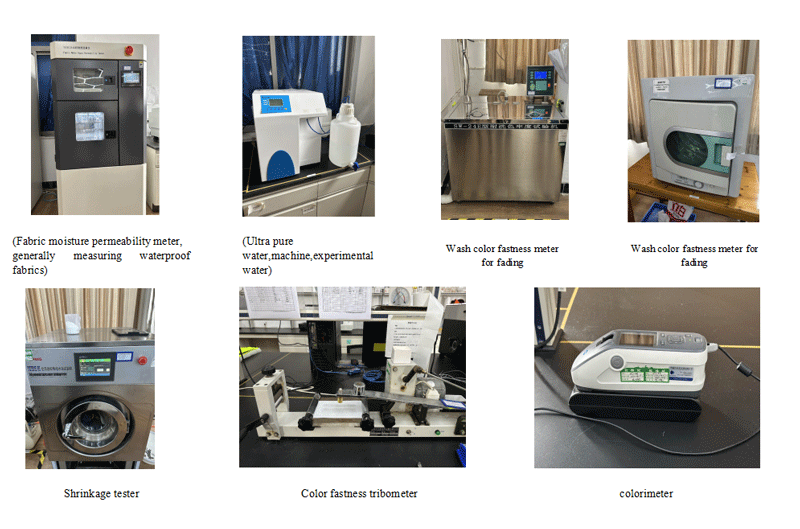
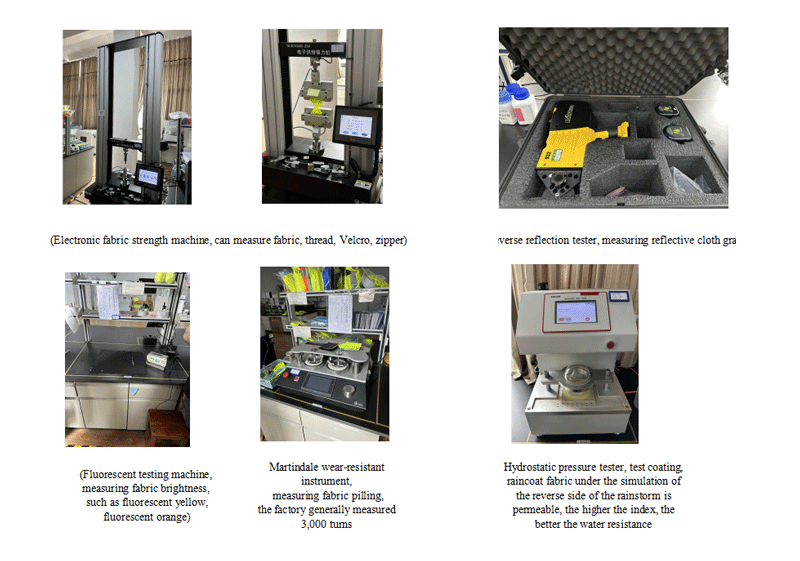
Test method

Retroreflectometer
A Retroreflectometer is used to check the performance
of retroreflective tape. Every roll of tape is tested to
ensure it meets and exceeds the standard requirements.
The retroflectometer measures the coefficient of
two rotating angles. EN ISO 20471 states the reading
should not be below 330 (cd/lx.m2)
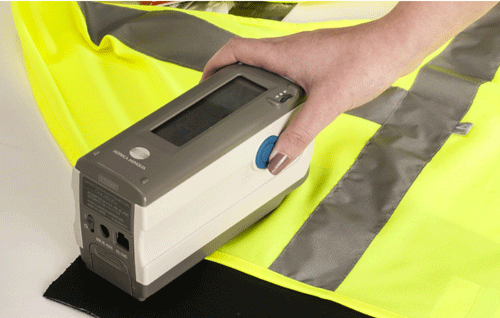
spectrophotometer
A spectrophotometer is used to check the
chromaticity – "colour intensity" – of fabric. We
use this to ensure every roll of fabric meets the
requirements of EN ISO 20471 and RIS-3279-TOM