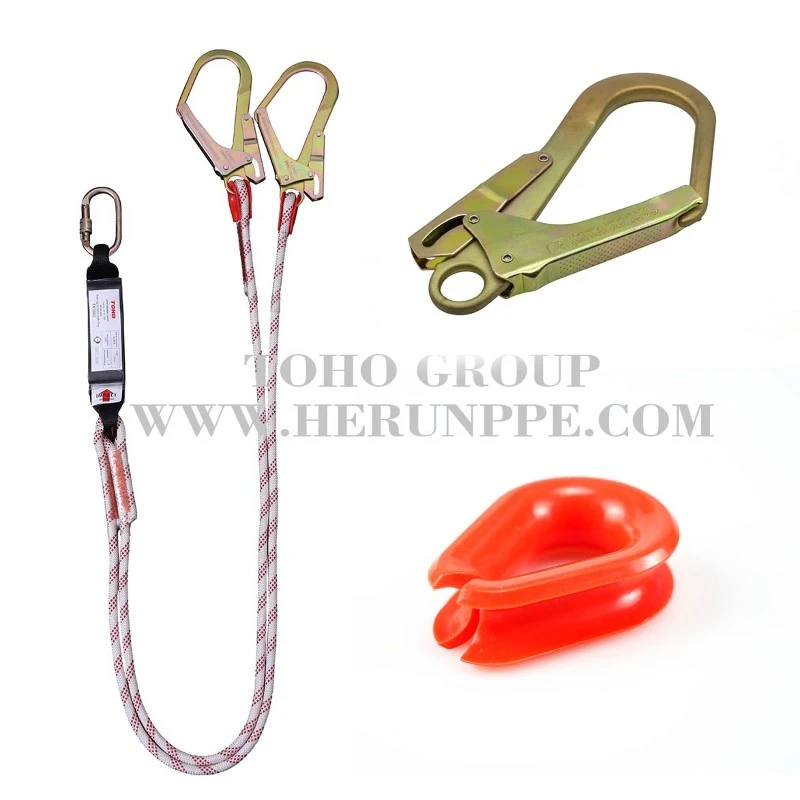
A safety lanyard is a piece of equipment used in various industries, particularly in construction, maintenance, and outdoor activities like rock climbing or sailing. It typically consists of a length of sturdy material, such as nylon or polyester rope or webbing, with a hook or carabiner at each end.
Safety lanyards are used to secure a person to an anchor point or structure to prevent falls or other accidents. They are often worn around the waist or torso and attached to a harness or safety belt worn by the individual. In the event of a slip or fall, the lanyard keeps the person tethered to the anchor point, reducing the risk of injury or death.
There are different types of safety lanyards, including shock-absorbing lanyards, which are designed to reduce the impact of a fall on the body, and positioning lanyards, which are used to support a worker in a specific position while working at height.
TOHO hot selling double hook safety lanyard


Do you know how to use a safety lanyard?
Using a safety lanyard properly is crucial for ensuring your safety while working at height or engaging in activities where a fall could occur. Here are general steps on how to use a safety lanyard effectively:
1. Inspect the equipment: Before each use, carefully inspect the safety lanyard for any signs of wear, damage, or defects. Check the stitching, webbing, hooks, and other components to ensure they are in good condition.
2. Choose the right lanyard: Select a safety lanyard that is appropriate for the task at hand and complies with relevant safety standards. Consider factors such as length, type (shock-absorbing, positioning, etc.), and weight capacity.
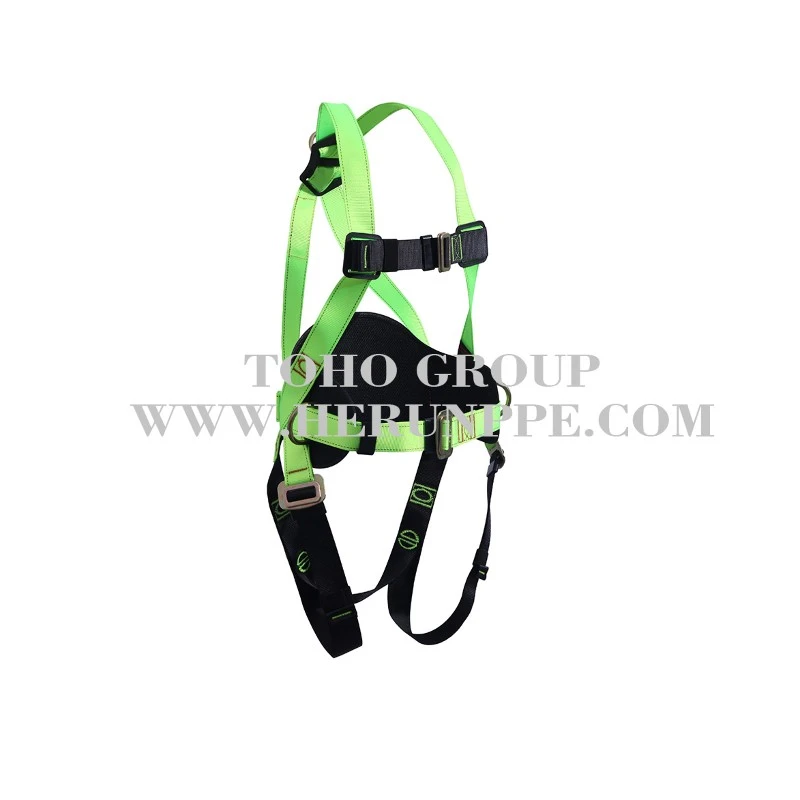
3. Put on your harness: If using a safety lanyard with a full-body harness, put on the harness according to the manufacturer's instructions and ensure it fits snugly and securely.
TOHO hot selling full body harness


4. Attach the lanyard to the anchor point: Connect one end of the safety lanyard to a secure anchor point using the hook or carabiner. Make sure the connection is properly locked and that the anchor point is strong and stable.
5. Attach the other end to your harness: Attach the other end of the safety lanyard to the designated attachment point on your harness. Again, ensure the connection is secure and properly locked.
6. Adjust the length: If using an adjustable lanyard, adjust the length to allow you to work comfortably while maintaining a safe distance from the edge or potential fall hazard.
7. Move with caution: When working at height, always move carefully and deliberately to avoid sudden movements or jerks on the lanyard, which could lead to a fall.
8. Regularly check connections: Throughout your work or activity, periodically check the connections between the safety lanyard, harness, and anchor point to make sure they remain secure.
9. Properly disengage after use: When you have completed your task or activity, carefully disengage the safety lanyard from the anchor point and harness, following any specific instructions provided by the manufacturer.
Store the lanyard correctly: After use, store the safety lanyard in a clean, dry place away from sunlight and chemicals, and ensure it is not tangled or damaged.
Remember that proper training and familiarization with the specific safety lanyard you are using are essential for safe and effective use. Always follow the manufacturer's instructions and any relevant safety guidelines or regulations.