

Can a single leg lanyard be used for signage installation on high structures? That's a question I get asked a lot, and as a single leg lanyard supplier, I'm more than happy to dive into this topic.

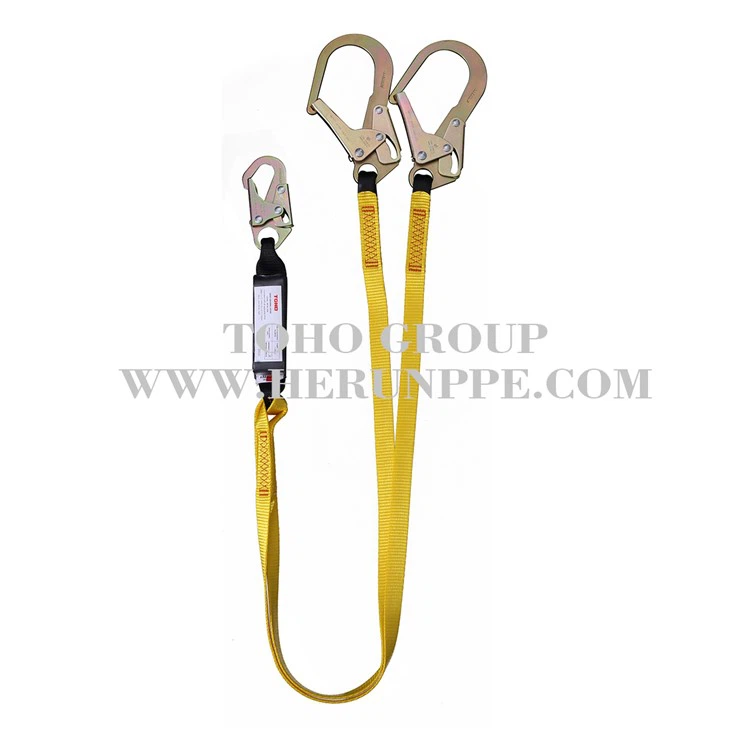
First off, let's talk about what a single leg lanyard is. It's a crucial piece of safety equipment designed to protect workers when they're working at heights. It consists of a single line or strap that attaches the worker to an anchor point, preventing them from falling.
Now, when it comes to signage installation on high structures, safety is the number one priority. Signage installation on tall buildings, bridges, or other high - rise structures can be extremely dangerous. Workers are often exposed to various hazards, such as strong winds, uneven surfaces, and the risk of tripping or losing their balance. That's where a single leg lanyard comes in handy.
One of the main advantages of using a single leg lanyard for signage installation is its simplicity. It's easy to use and doesn't require complex setup procedures. A worker can quickly attach the lanyard to an appropriate anchor point and start their work. This saves time, which is especially important when you're working on a tight schedule.
For example, let's say you're installing a large billboard on the side of a skyscraper. You don't have all day to fiddle around with complicated safety equipment. With a single leg lanyard like the Single leg elastic energy absorbing polyester webbing lanyard, you can just clip it on and get to work. This lanyard is made of polyester webbing and has an elastic energy - absorbing feature. It can effectively reduce the impact force in case of a fall, providing a high level of protection for the worker.
Another benefit is its portability. Single leg lanyards are usually lightweight and compact, making them easy to carry around. When you're moving from one installation site to another, you don't have to worry about lugging around heavy and bulky safety gear. You can simply throw your single leg lanyard in your toolbox and be on your way.
However, it's not all sunshine and rainbows. There are also some limitations and considerations when using a single leg lanyard for signage installation.
One of the main concerns is the anchor point. The anchor point needs to be strong enough to support the weight of the worker and withstand the impact force in case of a fall. For signage installation on high structures, finding a suitable anchor point can be challenging. You might have to rely on the existing structure of the building, such as steel beams or concrete columns. But you need to make sure that these anchor points are in good condition and can bear the load.
Also, single leg lanyards have a limited range of movement. When you're installing signage, you might need to move around a bit to get the perfect position. With a single leg lanyard, your movement is restricted to the length of the lanyard. This could potentially make the installation process more difficult, especially if you're working on a large sign.
To overcome some of these limitations, there are other types of single leg lanyards available in the market. For instance, the Ansi certified two hook lanyard with energy absorber is a great option. It has two hooks, which gives you more flexibility in terms of attachment and movement. The energy absorber helps to reduce the shock in case of a fall, ensuring your safety.
And then there's the Shock Absorb Lanyard With Scaffolding Hook. This lanyard is specifically designed for use with scaffolding, which is often used in high - rise signage installation. The scaffolding hook makes it easy to attach the lanyard to the scaffolding structure, providing a secure connection.
In addition to the type of lanyard, proper training is also essential. Workers need to know how to use the single leg lanyard correctly. They should be trained on how to inspect the lanyard before use, how to attach it to the anchor point, and what to do in case of a fall. A well - trained worker is more likely to use the safety equipment effectively and avoid accidents.
Moreover, regular maintenance and inspection of the single leg lanyard are crucial. Over time, the lanyard can be exposed to wear and tear, such as fraying of the webbing or damage to the hooks. If these issues are not detected and addressed in time, they can compromise the safety of the worker. So, make sure to check your lanyard regularly for any signs of damage and replace it if necessary.
In conclusion, a single leg lanyard can definitely be used for signage installation on high structures. It offers simplicity, portability, and a certain level of safety. However, it's important to be aware of its limitations and take appropriate measures to ensure its proper use. By choosing the right type of lanyard, providing proper training, and conducting regular maintenance, you can enhance the safety of your workers during signage installation.
If you're in the market for high - quality single leg lanyards for your signage installation projects, we're here to help. We offer a wide range of single leg lanyards that meet the highest safety standards. Whether you need a basic lanyard or a more advanced one with special features, we've got you covered. Contact us to start a purchase negotiation, and let's work together to keep your workers safe.
References
- OSHA (Occupational Safety and Health Administration) guidelines on fall protection equipment
- Industry standards for single leg lanyards
